Eat Your Collagen, Don’t Wear It

Dear Maryam,
Collagen is having a moment, and it deserves one. It is the scaffolding of the skin, the protein that gives a face its firmness, its bounce, its youthful architecture. We start losing it in our mid- twenties, and the visible cost is the softening, thinning, and creasing so many of us are trying to slow down.
So the enthusiasm makes sense. The confusion is the problem. The collagen trend is not wrong. It is simply pointed in the wrong direction.
Collagen now sits in serums, creams, masks, powders, and gummies, and most people quietly assume that if a product contains it, their skin must be absorbing it. That is usually not what is happening.
Your skin is a barrier first and a sponge second. Its job, the one it does brilliantly, is to keep the outside world out. The outermost layer, the stratum corneum, is highly selective about what it lets through, and as a rough rule a molecule has to be quite small, under about 500 daltons, to pass into the living skin below. A collagen molecule is enormous by comparison, often around 300,000 daltons. Asking it to cross the skin barrier is like asking a grand piano to slip under a door.
That does not make topical collagen useless. On the surface it behaves as a fine humectant, holding water, softening texture, and making light fall more flatteringly for a few hours. Your face can genuinely look more supple after you use it.
But that is a surface effect, and a temporary one. A conventional collagen cream is not rebuilding the collagen architecture in your dermis. The molecule simply is not reaching the place where collagen is made.
Ingestible collagen works on a different principle, and this is where it gets interesting. Quality oral collagen is hydrolyzed, broken into very small peptides before it ever reaches you. You absorb those peptides into your bloodstream, and they travel everywhere your blood travels, including the deeper layers of your skin. Some serve as raw building material. More intriguingly, research suggests certain peptides act as messengers, signaling the fibroblasts in your dermis, the cells that actually make collagen, to get back to work.
You are not painting collagen onto a wall. You are sending a memo to the construction crew.
But peptides are only half the story, and this is where most people stop too soon. Your body cannot assemble collagen without the right tools, and chief among them is vitamin C. It is not a nice extra. It is required for the chemistry that locks collagen into its stable structure, which is why scurvy, a vitamin C deficiency, shows up historically as skin and connective tissue coming apart. Zinc, copper, and adequate protein matter too. Send the body collagen without enough of these and much of that raw material simply goes unused, lumber delivered to a site with no crew to build.
I did not learn this from skincare. I learned it in the burn and intensive care units, where the stakes are far higher than a fine line. When someone has to rebuild skin after a serious wound, no one reaches for a cream. We feed them, deliberately, with protein, vitamin C, zinc, and the nutrients the body actually uses to repair itself. Watching that work, over and over, is what changed the way I think about everyday skin aging.
None of this makes supplements magic, and it does not make topicals pointless. Sunscreen protects the collagen you already have from UV damage. A well-formulated vitamin C serum helps defend against oxidative stress. Retinoids, when your skin tolerates them, remain among the best-studied tools we have. Each lane does something real. The key is understanding what each one can and cannot do. If the goal is to build collagen, that work happens from within.
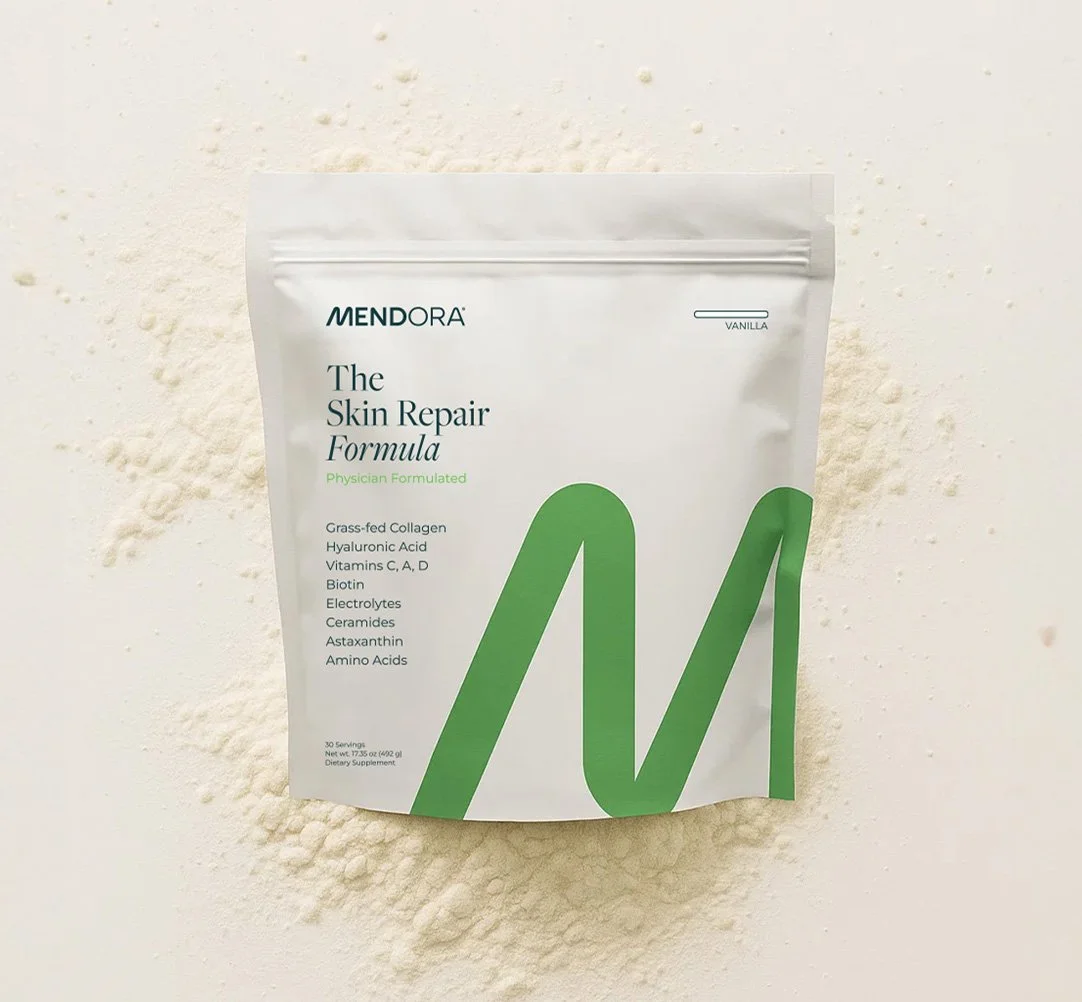
So my practical advice is simple. Look for hydrolyzed collagen peptides, ideally alongside the cofactors that put them to work, vitamin C and zinc among them. Choose a brand that tests its raw materials and is willing to say so. Then give it time, because skin biology does not change overnight. Eight to twelve weeks is a fair window before you judge.
Collagen is not a myth. It is one of the most important molecules in your face. But it is not something you can smooth into place from the outside. Skin rebuilds through biology, not wishful thinking. And biology has to be fed.
Beverly Hills oculoplastic surgeon Dr. Kami Parsa, MD specializes exclusively in reconstructive, revisional and cosmetic surgery of the eyes and surrounding tissue. His signature technique for treating undereye bags - and astonishing Before & Afters - have earned him a one-year consultation waitlist and more than 380k Instagram followers, as his natural looking results are coveted by A-list celebrities and patients around the globe.