
The Modern Breast Lift: Why More Women Are Saying No to Implants
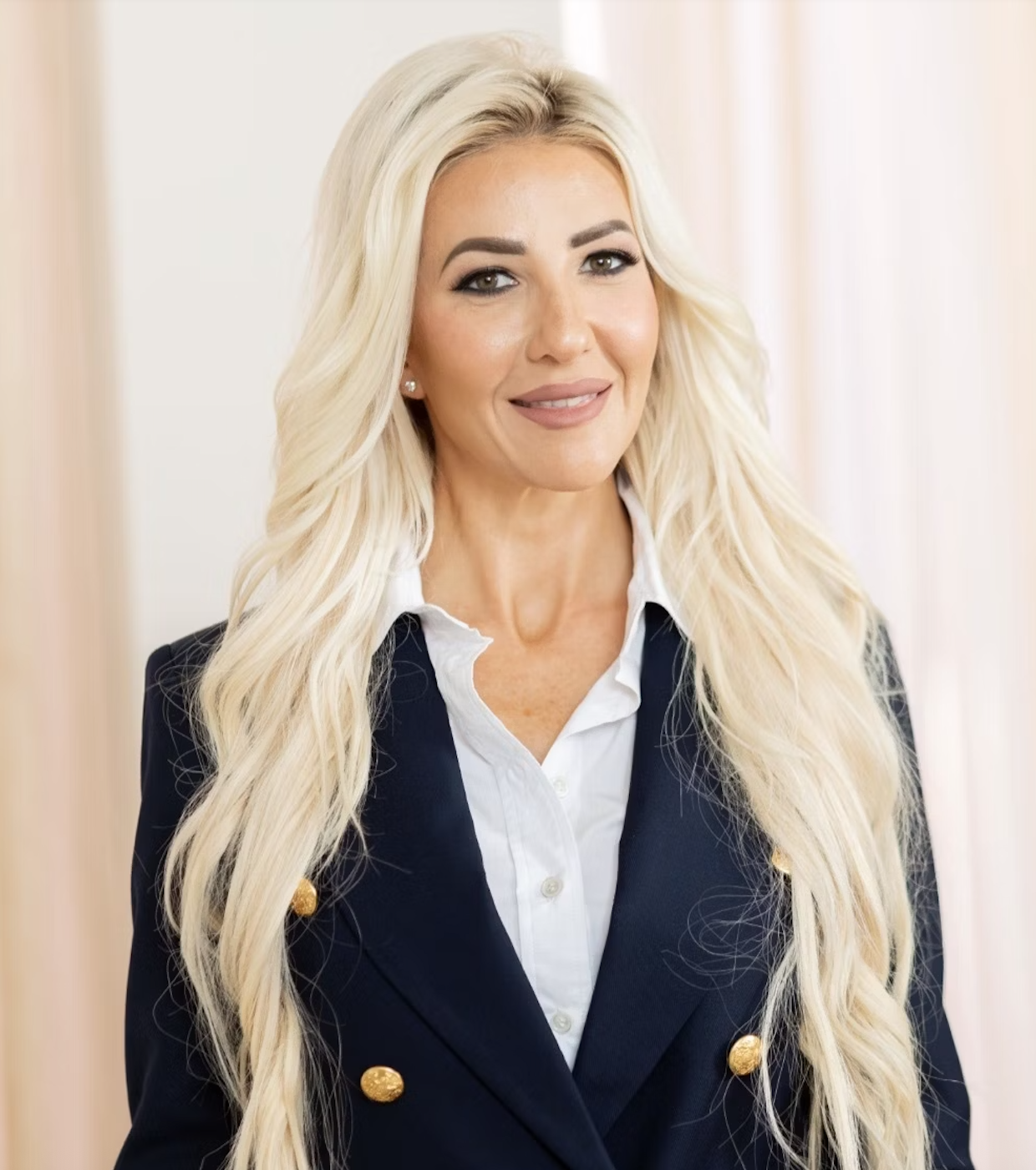
By Kandace Kichler, MD, FACS
Dear Maryam,
A quiet shift is happening in aesthetic medicine. It's one that doesn’t rely on dramatic before-and-afters or overt transformation. Instead, it’s rooted in refinement and restoration—a more nuanced understanding of what it means to feel like yourself again.
For years, breast augmentation and having fuller, rounder, more projected breasts defined the conversation around cosmetic breast surgery. For many women, implants still serve an important purpose. But increasingly, I’m seeing a different type of patient in consultation; one who isn’t asking to be necessarily bigger, but to be brought back into proportion.
They come in saying things like, “I just want to look like me again.”
This shift is cultural as much as it is aesthetic. We’re moving away from overfilled faces and exaggerated curves toward something more intentional. There’s a growing appreciation for balance, for subtlety, for results that don’t immediately announce themselves—beauty that reads as effortless, even when it’s anything but.
Breasts, in particular, sit at the center of this conversation.
Between weight fluctuations (hello, GLPs!), pregnancy, breastfeeding, aging, and even fitness, the breast changes over time. Volume can be lost. Skin stretches. The nipple-areolar complex descends. But what many women don’t realize is that the issue isn’t always a lack of volume. Many times, it’s a loss of position and structure. And that distinction matters, because when the foundation is the issue, adding volume alone doesn’t solve the problem. In fact, it often exaggerates it.
That’s where the modern breast lift comes in.
At its core, a breast lift is about repositioning. It restores the breast to a more youthful, anatomical position on the chest wall, reshaping the tissue and elevating the nipple to where it naturally belongs. The goal isn’t to create something new, it’s to reestablish what was once there, often with subtle enhancements tailored to the individual.
In my practice, many women are surprised to learn that they don’t need implants to achieve the look they want. In fact, avoiding implants can often lead to a more natural result, one that aligns better with their body, their lifestyle, and their long-term goals.
There’s also a growing cohort of women who are choosing to remove their implants altogether. Some are motivated by lifestyle changes or aesthetic preferences, while others are driven by symptoms often described as breast implant illness. While the medical community continues to study and better define this condition, the patient experience is real, and it’s prompting many women to reevaluate whether implants align with how they want to feel in their bodies.
For patients who still desire a modest increase in volume, we now have more nuanced options than implants alone. Fat transfer (using a patient’s own tissue) can be combined with a lift to subtly enhance fullness while maintaining a natural look and feel. In select cases, advanced biologic fillers derived from donor tissue, such as Lipoderma or Alloclae, can also be used to refine contour and restore volume. These approaches allow for incremental, tailored enhancement, supporting shape and proportion without the need for a permanent implant.
At the same time, expectations around how surgery fits into life have evolved. Patients are more informed, more selective, and often less willing to undergo general anesthesia or prolonged downtime if there are alternatives that can achieve a refined result.
That’s where newer techniques are changing the conversation. Procedures like AirSculpt® BreastLift allow us to approach breast rejuvenation with a level of precision and finesse that feels aligned with this moment. By combining advanced tissue handling with minimally invasive fat transfer, we can enhance contour, improve upper pole fullness, and refine shape, all while the patient remains awake under local anesthesia. For the right candidate, this approach offers a compelling balance: meaningful aesthetic improvement without the experience of traditional surgery. Importantly, the process itself feels different. It’s more controlled, more personalized, and often more approachable for patients who might otherwise hesitate to pursue surgery at all.
But beyond technique, what’s most compelling about this moment is the mind-set behind it. Women are no longer asking, “How do I change my body?” They’re asking, “How do I come back into alignment with my body?” That’s a fundamentally different question, and it leads to fundamentally different decisions.
The breast lift, in many ways, represents that evolution. And the movement reflects a broader truth we’re seeing across aesthetic medicine: the most powerful results are often the ones that look like nothing was done at all.
Dr. Kandace Kichler is a double board-certified cosmetic surgeon for AirSculpt.